By Portrait Gift Team | March 28, 2026 | 15 min read
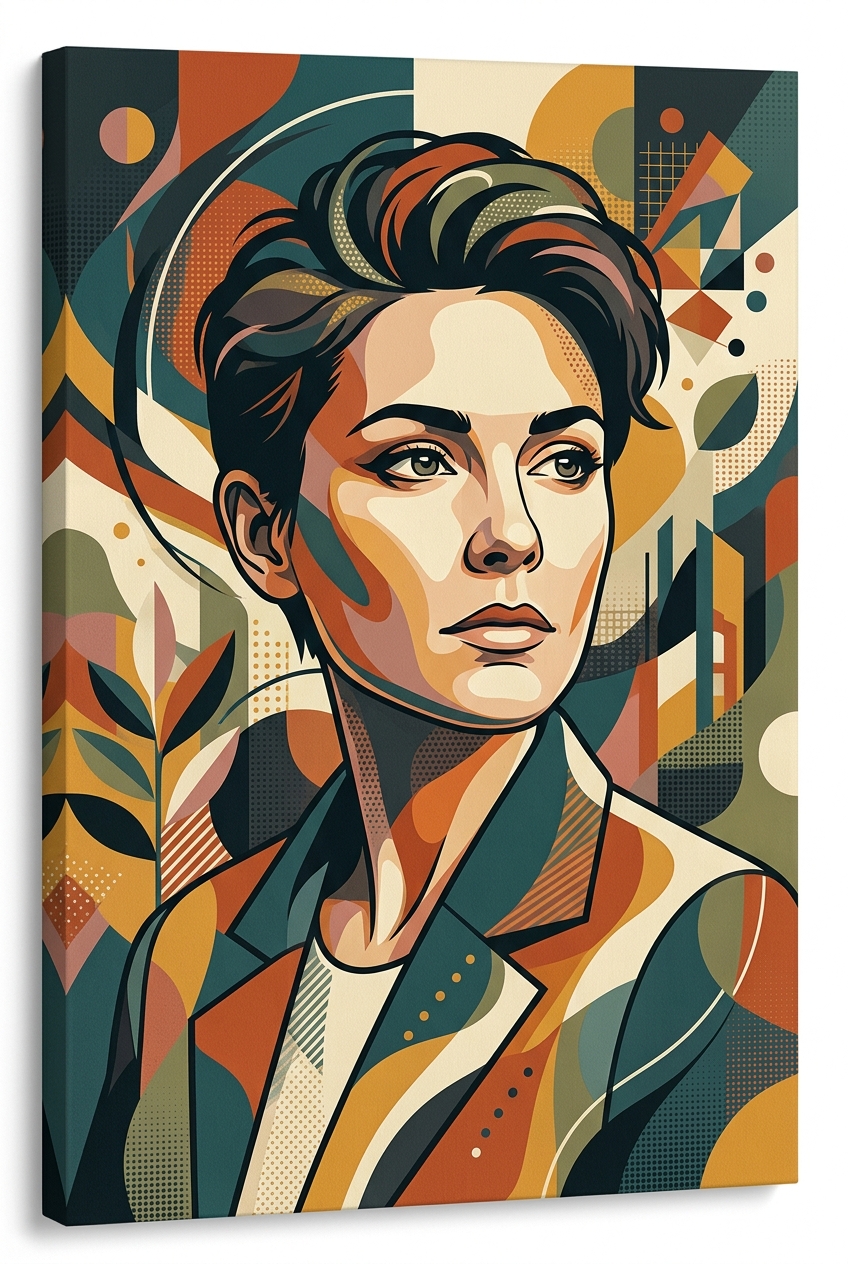
Science shows personalized gifts spark deeper emotion, stronger memories, and lasting joy. Explore why custom portraits make unforgettable presents—plus expert tips and moving real-life stories.
There is a precise reason some gifts become family legends while others are forgotten by next month: the brain remembers what feels personal. In this guide, we unpack the psychology and neuroscience of why personalized gifts are better, how they forge stronger memories, and why a custom portrait is one of the most potent ways to create a moment they will never forget.
As gifting specialists at PortraitGift (50,000+ happy customers, 4.9/5 rating), we have witnessed thousands of tear-filled reveals. And the pattern is clear: when a gift reflects someone’s identity and story, it hits the heart first—and the memory lasts.
Gift-giving is uniquely human. It signals care, closeness, and understanding. Yet research shows givers often misjudge what recipients value most. We worry about price and practicality, while recipients crave thoughtfulness, identity, and emotional resonance. The science of gift giving repeatedly reveals a gap between what we think others want and what actually brings happiness.
Psychologists call this the meaning-over-money effect: sentimental, identity-rich presents are remembered and appreciated more than expensive but generic items. Multiple lines of research highlight four principles that explain why personalized gifts are better:
Put simply: a personalized gift that captures who we are is more emotionally arousing, more distinctive, and more likely to be kept—and talked about—for years.
For a deeper dive on gift-giving research, the American Psychological Association summarizes common pitfalls and better practices in an accessible overview (APA Monitor on Psychology).
The question at the heart of meaningful gifts psychology is simple: why do personal touches matter so much? Laboratory and field studies converge on the idea that personalization changes encoding—the way a memory is stored in the first place. When a gift is tied to our identity (our face, our name, our story), our brain allocates more attention and emotion to the moment, which makes memory traces stronger.
Classic work on the self-reference effect shows that information connected to the self is remembered best. When subjects process words or images in relation to themselves (vs. in a shallow or semantic way), later recall jumps significantly. This is not a subtle gain; it’s one of the most reliable findings in cognitive psychology (overview).
Other research finds that distinctiveness boosts long-term retention (the Von Restorff effect). A gift no one else has—like a custom portrait with their actual face—becomes a landmark in memory (overview).
Finally, there’s the effort piece. When we curate photos, choose a style, and add personal details, recipients infer care and closeness. This is related to the IKEA effect: effort increases perceived value (Harvard Business Review).
Faces are special to the brain. We are hardwired to attend to faces rapidly and automatically—a function of the fusiform face area (FFA) in the temporal lobe, which specializes in face perception (overview).
But it’s not just any face. Seeing your own face recruits self-referential processing networks, including the medial prefrontal cortex (mPFC). Studies using fMRI have documented stronger activity when people view self-related stimuli, which correlates with better memory encoding (overview and related citations). Emotional faces also engage the amygdala, influencing the hippocampus—our brain’s memory gateway—to prioritize which moments get stored for the long haul (overview).
Now add art. Artistic stylization, color, and composition increase novelty. Novelty activates reward pathways and attention systems, further improving memory. This is why a personalized portrait—especially a bold, modern one like our Abstract Vision Custom Portrait Pop Art—combines familiarity (your face) with surprise (a striking, contemporary style). That combo is rocket fuel for memory formation.
In other words: a custom portrait is more than decor. It’s a carefully engineered memory engine.
At PortraitGift, we’ve seen every kind of reaction, from stunned laughter to silent, hand-over-mouth awe. Here are five real, representative stories (shared with permission) that show how personalization transforms a moment into a memory for life.
Jordan planned something simple for their 10th anniversary: dinner at their favorite neighborhood spot. But just before dessert, they pulled out a wrapped canvas—an Abstract Vision Custom Portrait Pop Art of them and their spouse, based on a candid hiking selfie taken right after a tough stretch of medical appointments.
When the canvas emerged, Jordan’s spouse went quiet. Tears fell—then a smile. Later they said, ‘That was the day I started to believe in us again. You made it art.’ Now the portrait hangs by the front door. Leaving the house each morning, they tap the frame for luck. Memory isn’t just recall; it’s ritual.
Maya’s friends pooled funds for a milestone gift. They collected photos across a decade—backpacks, beach days, first apartment. The reveal was theatrical: lights off, eyes covered, and then—spotlight on a glossy, vibrant pop art portrait in bold color fields, their grin impossible to miss.
Maya gasped, then hugged everyone at once. Weeks later, a new tradition formed: guests sign the back of the canvas with a favorite memory. It’s living history, made mesmerizing by the image on the front.
Notoriously hard to shop for, Sam’s dad usually shrugged at ties and gadgets. This time, Sam used a faded childhood Polaroid—bike helmet askew, scraped knee, triumphant smile—to commission a bold, abstract portrait. On Father’s Day, the family gathered in the kitchen; Sam’s dad unwrapped the canvas and put a hand over his heart.
‘I remember that day,’ he said. ‘You fell, you got up, you kept going. That’s you.’ He keeps the portrait in his home office where his grandkids can see it on video calls—and the story gets retold every time.
During a year apart, Anika wanted to send something to her partner overseas that said, ‘We’re still us.’ She chose a couple’s snapshot from their favorite city bench and transformed it into a sleek pop art canvas. When the package landed, they opened it together on a video call.
First came the laugh—‘We look like an album cover!’—then the tears. The portrait now hangs by the window where the afternoon light catches it. Geographic distance softened; emotional closeness strengthened.
For her daughter’s graduation, Alondra chose a celebratory portrait: cap, gown, and the exact sunflare from the ceremony photo, remixed into a dynamic abstract style. When her daughter unboxed it, she cried, then whispered, ‘I can do hard things.’
Months later, during a stressful job hunt, she would glance at the canvas and breathe deeper. The gift became not just a reminder of a day, but a promise to herself, made visible.
Put these stories and studies together and a pattern emerges. Emotion acts as a highlighter, novelty as a bookmark, and self-relevance as a sticky note on your brain’s desk. That’s why personalized gifts and memories are inseparable—especially when the gift is visual and identity-rich.
Layer on top a bold art style—like the dramatic geometry and color blocking in Abstract Vision Custom Portrait Pop Art—and you get a gift that is neurologically noisy in all the right ways.
Ask any organizer: the first items to survive a declutter are the ones with stories. Four forces explain why personalization boosts longevity:
Contrast this with generic gifts, which are harder to attach to a narrative. No story, no staying power.
Personalization takes many forms—engraved jewelry, monogrammed bags, custom playlists. They all leverage the self-reference effect. Portraits, however, add the unique power of the face—our brain’s favorite subject—plus the picture superiority effect and the decor advantage (constant visibility). That makes portrait art one of the most potent paths to long-term memory.
If their style leans modern, our featured pick is the Abstract Vision Custom Portrait Pop Art on premium museum-quality canvas (just $59.9). For different personalities, explore:
Scientific translation: pick a moment with meaning. Emotion fuels memory. Think first dates, graduations, rescue-pet adoptions, inside jokes, travel surprises, or that goofy selfie you both adore. For step-by-step photo guidance, see our expert tips in How to Choose the Perfect Photo for a Portrait.
Are they minimalist and modern? Abstract pop art is a knockout because it’s graphic, bold, and gallery-worthy. Are they a fantasy fan? Go epic with a Fantasy Hero Custom Portrait. Do they binge royal dramas? Try a Royal Renaissance Custom Portrait. The closer the style is to their self-image, the stronger the emotional response.
A date hidden in the background colorway. The coordinates of your first kiss. Their favorite color as the dominant hue. These micro-touches amplify personal salience and deepen the story.
The brain encodes peak moments more vividly. Create build-up: dim the lights, play your song, share a toast before the unboxing. The reveal will be etched in memory along with the gift itself.
They’re processed more deeply by the brain because they’re self-relevant, distinctive, and emotionally charged. That combination creates stronger, longer-lasting memories than generic gifts.
Your face activates specialized brain regions for identity and emotion. When that face appears in art—novel, colorful, stylized—attention and emotion spike, supercharging memory formation.
We’ve helped over 50,000 customers turn ordinary photos into conversation-starting art, earning a 4.9/5 average rating. Our artists translate your images into bold, modern compositions and print them on premium, museum-quality canvas designed to last—so the memory does, too. Most importantly, we guide you on selecting the right photo, palette, and vibe for the person you love. That’s the difference between a nice gift and an unforgettable one.
Ready to create one? Start with our most-loved modern style: Abstract Vision Custom Portrait Pop Art—a striking, sophisticated way to capture anyone’s essence in a truly contemporary form.
Yes—research shows self-relevant, distinctive gifts are processed more deeply and remembered longer. That translates to stronger emotional impact and higher long-term satisfaction.
Faces are your brain’s favorite subject. When a familiar face appears in art (novel + emotional), attention spikes and memory consolidation improves, making the moment unforgettable.
Pick a clear, well-lit image that carries a meaningful moment—laughter, triumph, or tenderness. For pro tips, read How to Choose the Perfect Photo for a Portrait.
Start with the person’s vibe. For modern, editorial energy, go with Abstract Vision Custom Portrait Pop Art. For period drama lovers, try our Royal Renaissance style; for adventurers, the Viking Warrior look is a hit.
Display rate is high because personalized portraits double as decor and story. People love seeing themselves and their favorite moments elevated in art—guests love the story behind it, too.
If your goal is to create a moment they’ll replay for years, personalization isn’t a perk—it’s the path.
Imagine them unwrapping a portrait that captures their essence in color and light—suddenly the room goes quiet, then the smile arrives, and maybe a tear or two. That’s the power of image, identity, and intention working together. Begin with our modern classic: Abstract Vision Custom Portrait Pop Art on premium canvas (just $59.9).
Yes. Research shows self-relevant, distinctive gifts create deeper emotional responses and stronger memories than generic items. Personalization signals care and strengthens the giver–receiver bond.
Faces are the brain’s favorite subject. When someone sees their own face rendered as art, attention and emotion spike, boosting memory consolidation and long-term appreciation.
Pick a clear, well-lit photo that captures a meaningful moment—laughter, triumph, or tenderness. Close-ups with visible eyes work beautifully. Avoid heavy filters that alter natural colors.
Consider where it will hang. For small spaces, a modest canvas makes a focused statement; for living rooms or entryways, a larger canvas becomes a conversation centerpiece.
Pop art’s bold, modern look fits many tastes, especially contemporary decor. If the recipient loves clean lines and color, it’s a perfect match; classic or fantasy lovers may prefer styles like Royal or Viking.