By Portrait Gift Team | March 12, 2026 | 15 min read
Personalized gifts don’t just delight in the moment—they imprint memories. Explore the neuroscience and psychology that make custom portraits unforgettable keepsakes for couples.
If you’ve ever wondered why personalized gifts feel so much more special than something off the shelf, you’re not imagining it. There is real psychology—and even neuroscience—behind why personalized gifts are better at creating deep, lasting memories. As a team at PortraitGift.com that has helped 50,000+ people turn photos into breathtaking, themed art on museum-quality canvas, we’ve seen the tears-of-joy moments up close. And the science agrees: when a gift reflects who we are, our brains remember it differently, our hearts attach to it more strongly, and our relationships grow closer.
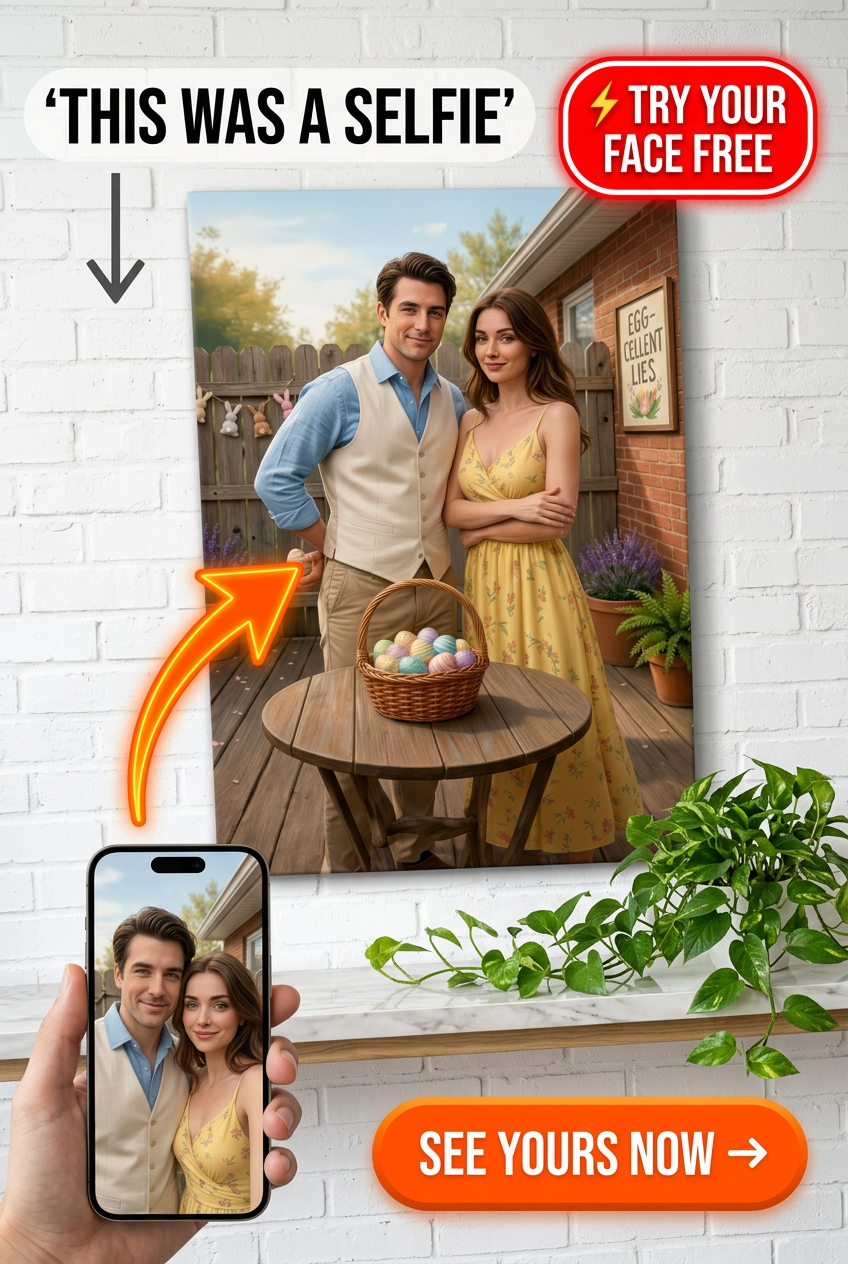
In this guide, we’ll unpack the science of gift giving, explain how personalization boosts memory, and share five real customer stories that still give us goosebumps. We’ll also show you how a custom couple portrait—like our charming Easter-themed couple portrait—can become a cherished keepsake that outlasts trends and seasons.
The magic of personalization isn’t just a nice idea—it’s supported by decades of research across psychology and consumer behavior. Here are the cornerstone concepts that explain why personalized gifts and memories are so intertwined:
We’re natural experts on ourselves. When information is tied to our identity—our names, faces, stories—we remember it far better. Classic research shows that connecting content to the self leads to stronger memory encoding (Rogers, Kuiper & Kirker, 1977). Later neuroimaging work found that self-referential thinking activates brain regions linked with memory and valuation, including the medial prefrontal cortex (Kelley et al., 2002). Personalized gifts plug directly into this mechanism.
In practice? A custom portrait starring you and your partner isn’t just “a picture.” It’s a reflection of who you are together—and your brain treats it as more important.
When givers participate in creating or customizing a gift, they feel more proud of it—and receivers sense that extra effort. Researchers call this the IKEA effect: when people invest effort, they assign greater value to the outcome (Norton, Mochon & Ariely, 2012). Choosing a theme, uploading photos, and previewing a design transforms a gift from generic to co-created art. That’s one reason our instant preview feels thrilling—it invites you into the creative process.
People place a higher value on objects they own, a robust phenomenon known as the endowment effect (Kahneman, Knetsch & Thaler, 1990). Personalization doubles down on this by making the item feel not only owned, but intertwined with the self. As consumer researcher Russell Belk famously wrote, possessions can become part of the “extended self” (Belk, 1988). A custom couple portrait is the epitome of that idea.
Gifts that center on experience rather than pure utility tend to bring people closer. In a large set of studies, experiential gifts fostered stronger social connections between givers and recipients (Chan & Mogilner, 2017). While a canvas portrait is a physical object, the reaction it creates—a reveal, laughter, tears, pride when hanging it—is a profound shared experience. That’s why personalized gifts and memories are inseparable.
Distinctive items are easier to remember. Vivid imagery has a natural edge in memory, often beating words and abstract concepts (Nelson, Reed & Walling, 1976). Classic memory research even showed people can recall thousands of pictures remarkably well (Standing, 1973). A high-impact portrait—say, you and your partner as a royal couple, a pair of fearless pirates, or an elegant Easter duo—benefits from this vividness advantage every day it’s on display.
Let’s zoom in to the brain level. Faces are special. We’ve evolved dedicated neural real estate to recognize them quickly and emotionally. A region called the fusiform face area (FFA) is specialized for face perception (Kanwisher, McDermott & Chun, 1997). When the face is your own—or your partner’s—the response is even more personal. Self-related processing recruits networks that boost attention and memory encoding, while emotionally salient images heighten amygdala activity, which in turn can enhance the consolidation of memories in the hippocampus (Dolcos, LaBar & Cabeza, 2004).
Translation: a portrait featuring your faces is not a neutral stimulus. It gets prioritized by your brain as meaningful and worthy of remembering. That’s one reason custom portraits can elicit such strong, immediate reactions—goosebumps, laughter, or tears.
Sure, a gift card is practical—but it won’t be retold as a story years later. Personalized portraits, especially themed ones, bundle multiple memory-boosters into a single gift:
At PortraitGift.com, we’ve designed every detail to amplify these effects. Our Easter-themed couple portrait delivers a bright, joyful aesthetic perfect for spring engagements, first Easters together, or a playful anniversary surprise. If your vibe is more adventurous, check out the equally unforgettable Sci‑Fi Custom Portrait for Couples, the heroic Viking Couples Portrait, the whimsical Fantasy Couples Portrait, the regal Royal Couples Portrait, or the swashbuckling Pirate-Themed Couples Portrait.
We protect our customers’ privacy, but these real stories (shared with permission) capture why custom portraits become legendary in a relationship. Grab the tissues.
Maya and Theo had just moved in together. For their first spring in a new city, Maya surprised Theo with our Easter-themed couple portrait. When he unwrapped it, he laughed at the adorable details—the soft pastels, the charming outfits—and then went quiet. “I’ve never seen us look so ‘us’ before,” he said. It became the first thing they hung in their apartment. Every Easter since, it comes down from the wall to sit on the mantel—a ritual that sparks the same happy lump in the throat.
Steph and Nora spent a year apart for school. To mark a reunion weekend, Steph designed a Fantasy Couples Portrait where they stood together in a magical forest. At the reveal, Nora’s eyes welled up instantly. “It feels like we lived this whole other life together,” she said. The piece traveled with them to two different apartments and now hangs where they drop their keys—a reminder they made it through.
Marcus planned to propose on a coastal hike. The day before, he gifted Lily a Royal Couples Portrait with a handwritten note: “Our love story deserves a crown.” She cried, then laughed through tears: “Are you trying to tell me something?” The next day, when he did ask, she said the portrait made the proposal feel like the second chapter of a story that had already begun. It’s in their living room with the note framed beside it.
After job changes and a family loss, Jen wanted to remind her partner, Alice, of their strength. She chose the Viking Couples Portrait. When Alice saw them rendered as brave, battle-ready partners, she hugged Jen and cried—“This is how we got through.” The piece became a symbol they’d point to, even on normal Tuesdays: “Look at us.” That’s memory as meaning, made visible.
On their first date, Luis joked he had a pirate’s heart. Years later, Ana gifted the Pirate-Themed Couples Portrait for their anniversary. He burst out laughing, then got misty-eyed. “You remembered.” The portrait was more than a joke—it proved she’d been listening since day one. He says it’s the best gift he’s ever gotten.
When people ask about the science of gift giving, they often want a one-line answer. Here it is: personalized gifts work because they align with how our brains prioritize information—self-relevance, distinctiveness, and emotion all supercharge memory. But the real win is relational. A meaningful gift creates a shared story. As research on experiential gifts shows, that story can strengthen bonds long after the wrapping is gone (Chan & Mogilner, 2017).
The result is a new family ritual: the portrait that everyone points to during holidays, the anniversary wall that grows over time, the playful tradition of choosing your next theme—perhaps the bright joy of our Easter portrait for couples this season, followed by a daring Sci‑Fi Couples Portrait for your next milestone.
Contrast that with generic gifts: they lack distinctiveness, don’t tie to the self, and rarely become part of a shared ritual. It’s not that they’re “bad”—they just aren’t built for memory.
Not sure which theme fits? Try this quick guide to match your story to the art:
Every option starts at just $35 with museum-quality canvas, fast shipping, and a 100% satisfaction guarantee. You’ll upload your photo and see an instant preview—so you know it’s perfect before you order.
Yes—on multiple levels. Personalized gifts trigger self-referential processing, evoke stronger emotion, and become displayable keepsakes. That’s a memory trifecta supported by research (Rogers et al., 1977; Dolcos et al., 2004).
Emotional arousal (surprise, joy, awe) can amplify memory consolidation via amygdala–hippocampal pathways. When the gift features your own faces and story, those emotions spike—cue happy tears and long-term recall (Dolcos, LaBar & Cabeza, 2004).
Monograms are nice, but a portrait integrates identity and narrative. Faces engage specialized brain regions (FFA), while story-driven art taps the self-reference effect—two big wins for meaning and memory (Kanwisher et al., 1997; Rogers et al., 1977).
Yes. Because it’s woven into your shared story, it tends to be displayed, discussed, and ritualized—each repetition re-strengthens the memory trace. That’s why couples keep heirloom portraits for decades.
At PortraitGift.com, yes. We keep pricing fair without cutting corners: premium canvas, vivid color, archival quality, plus fast shipping and a 100% satisfaction guarantee.
There’s a reason couples return to us for multiple portraits over the years: each piece becomes a chapter in their shared story. Start yours today with our joyful Easter-themed couple portrait—or choose the Sci‑Fi, Viking, Fantasy, Royal, or Pirate style that feels like you.
Upload your photo, get an instant preview, and enjoy premium canvas quality—starting at $35. The moment you reveal it will be unforgettable. The memory will last even longer.
Belk, R. (1988). Possessions and the extended self.
Chan, C., & Mogilner, C. (2017). Experiential gifts foster stronger social relationships.
Dolcos, F., LaBar, K. S., & Cabeza, R. (2004). Enhanced memory for emotional events.
Kahneman, D., Knetsch, J. L., & Thaler, R. (1990). Experimental tests of the endowment effect.
Kelley, W. M., et al. (2002). Self-referential processing in the medial prefrontal cortex.
Kanwisher, N., McDermott, J., & Chun, M. M. (1997). The fusiform face area and face perception.
Nelson, D. L., Reed, V. S., & Walling, J. R. (1976). Picture superiority effect.
Norton, M. I., Mochon, D., & Ariely, D. (2012). The IKEA effect: When labor leads to love.
Rogers, T. B., Kuiper, N. A., & Kirker, W. S. (1977). Self-reference and the encoding of personal information.
Standing, L. (1973). Learning 10,000 pictures.
Yes. Personalized gifts tap the self-reference effect, evoke stronger emotions, and are more likely to be displayed—factors that boost memory and relationship closeness. A custom couple portrait is a perfect example.
They combine self-relevance (your faces), vivid imagery (distinctive themes), and emotion (the reveal moment). This trio engages brain systems linked with attention and memory, making the gift unforgettable.
Use a clear, high-resolution photo with good lighting and natural expressions. Front-facing or slight angles with visible eyes produce the most lifelike results and maximize that instant recognition effect.
You’ll see an instant preview right after uploading your photo. Production and shipping are fast, and timelines are shown at checkout. Need it soon? Order now to secure delivery by your occasion date.
We offer a 100% satisfaction guarantee. Our team will make adjustments to ensure likeness and style match your expectations—because a gift this personal should feel perfect.