By Portrait Gift Team | August 15, 2026 | 4 min read
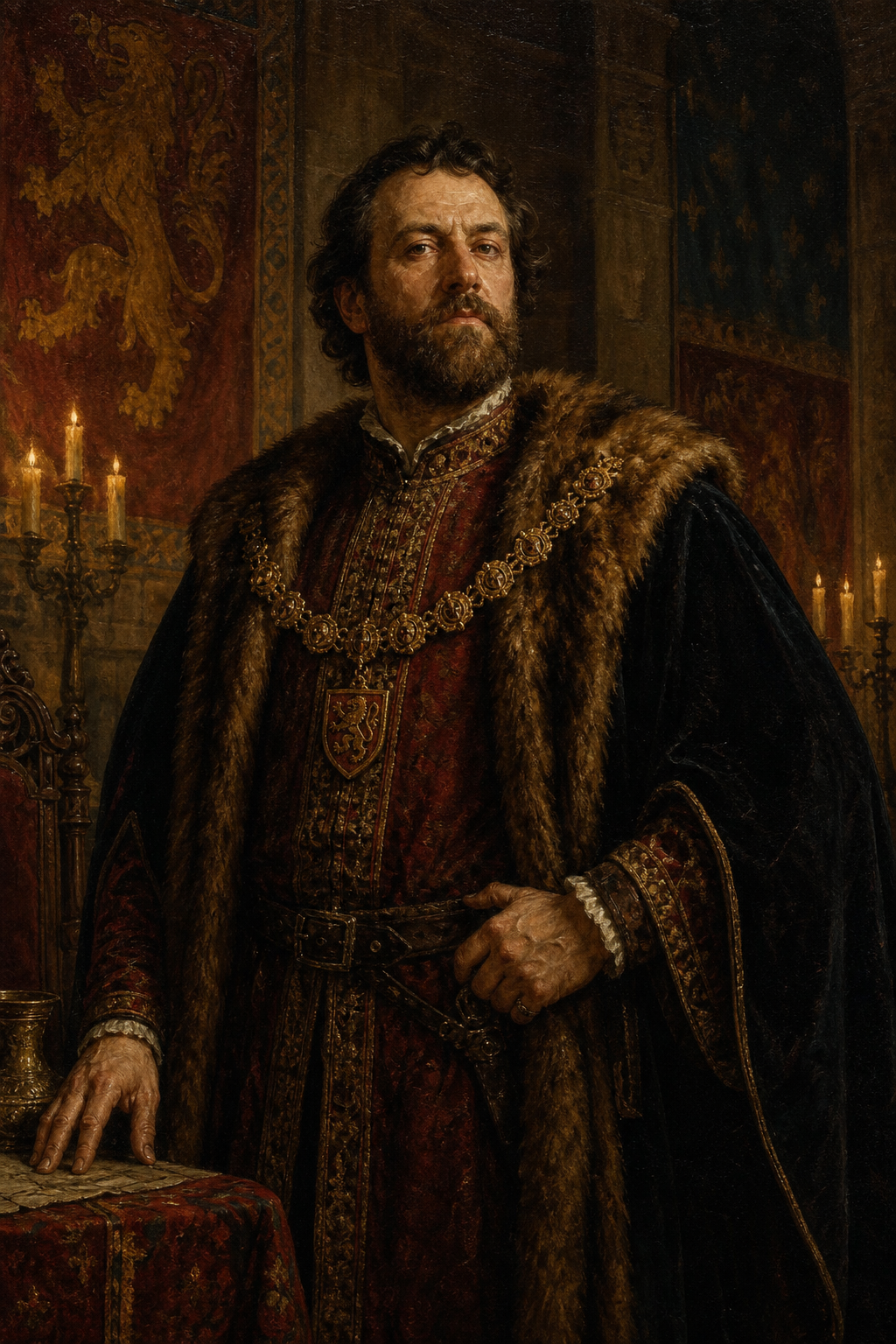
From a lone knight in plate armor to a whole family painted into a castle hall, these medieval portrait ideas show how real photos become old-master-style canvases — and how to pick the scene that fits the person.
Most medieval portrait ideas start from the same happy accident: the Middle Ages already solved the art direction. Plate armor, brocade gowns, banners, torchlit stone halls — the period hands you a complete visual language, and an oil-painting treatment makes any face look like it has hung in a castle corridor for four hundred years. The only modern ingredient needed is a photo. This guide walks through the scenes that work — solo knight, lord and lady, full family court, even the dog — and how to choose between them.
Three things sell the illusion. First, the materials: steel, brocade, fur trim, and stone read as medieval instantly, where generic "old-timey" costumes do not. Second, the light: torchlight and narrow windows give the heavy, warm shadows of an old-master canvas. Third, the paint itself: a classical oil-painting style with visible depth, rather than a photo filter, is what makes people lean in and ask when the family sat for it. Browse the custom medieval portraits hub to see how these elements combine across knights, nobles, lords and ladies.
The lone knight is the flagship medieval scene for a reason — it is recognition dressed as history. A single figure in polished plate armor, sword at rest, castle or battlefield behind, says this person holds the line without a word of explanation, which is why it lands so well as a gift for fathers, husbands, and anyone whose job is quietly keeping things standing. If you want the single heroic figure, start from a medieval knight portrait made from one photo.
The armor is not reserved for men. The female knight — full plate, unbraided hair, a warrior-queen's level stare — is one of the most-requested medieval treatments, and it reads as earned rather than costumed. For a woman who runs the household, the team, or both, it is often the truer choice than a gown.
The family version turns a portrait into a founding myth. Parents in armor, children as young squires, a family crest on the banner overhead, a castle courtyard behind: the scene declares that this particular household is an institution. The practical magic is that medieval family portraits are assembled from separate photos — each face comes from its own snapshot, so the college kid, the toddler, and the grandmother abroad can all stand in the same courtyard without anyone coordinating a photoshoot. That also keeps the portrait a genuine surprise for whoever it honors.
For couples, the period offers two registers. The formal one is the lord-and-lady pairing — two figures in court dress, composed like a marriage portrait commissioned to seal an alliance, which makes an anniversary gift with a straight face and a wink at the same time. The adventurous one puts both partners in armor as comrades-in-arms. Either way the couple scene is built from two separate photos, so one half of the couple can commission it without the other suspecting a thing.
Courts kept hounds, and heraldry is full of animals, so a pet in the portrait is not a joke bolted onto the theme — it is period-accurate. A dog or cat in miniature armor or a heraldic cape can anchor its own solo piece or be painted into the family scene at the foot of the group. In practice the knighted family dog is the detail guests notice first, which either delights or mildly annoys the humans in the frame, depending on the dog.
Every scene above starts from ordinary photos: one clear, well-lit, front-facing shot per face, phone camera fine. The costume, hair styling, and background are painted fresh, so the photo only needs to supply the face and its expression. Once the preview arrives — before any payment — judge it the way you would judge a portrait in a gallery: does the expression look like them on a good day? If yes, print it. If not, try a different photo; the preview is free, and the twelfth century is patient.
A medieval-style portrait takes a real photo of a person and repaints them as a figure from the Middle Ages — a knight in plate armor, a lord or lady in brocade, a noble in a torchlit castle hall — rendered in a classical oil-painting style on canvas. The face is yours; the armor, heraldry and stonework do the time travel. Because the finished preview is generated before payment, you can check that the likeness survived the trip to the twelfth century before committing to a print.
Yes, and this is the detail that makes the family version practical: each person is painted from their own photo, so a knight-family scene can gather parents, children, and a grandparent who lives three time zones away into one castle courtyard that never appeared in front of any camera. You need one clear photo per face. This also keeps the gift a surprise — nobody has to be herded into a suspicious group photoshoot first.
A clear, well-lit, front-facing photo works best, and an ordinary phone photo is perfectly fine. Avoid heavy sunglasses, extreme angles, and faces that are small in the frame; the painter needs the face, not the outfit, since the armor and gowns are replaced anyway. If you are choosing between an old print you love and a sharp recent snapshot, start with the sharp one and judge the free preview — you can always try the sentimental photo next.
Yes. Medieval pet portraits put a dog or cat in miniature knight armor or a heraldic cape against castle stonework, either as a solo piece or painted into the family scene. It is a genuinely medieval instinct — courts kept hounds, and heraldry is full of animals — and in practice the knighted family dog is often the detail visitors comment on before anything else in the portrait.