By Portrait Gift Team | August 6, 2026 | 3 min read
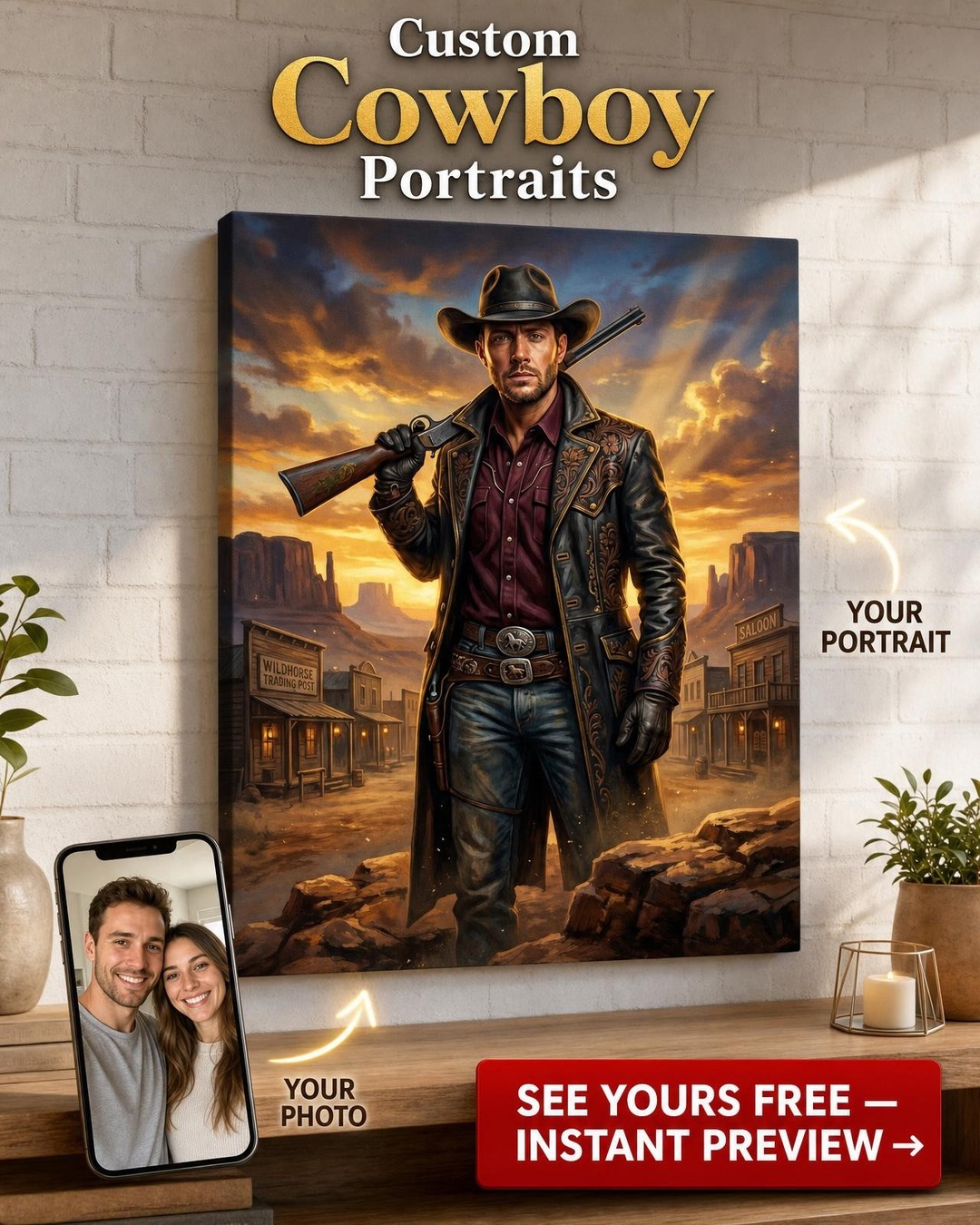
You don't need a hat, a horse, or a dusty ranch to plan a cowboy portrait. Start with a clear photo and a scene that suits the person. Here are western scene and pose ideas for men, women, couples, and families.
Search for cowboy portrait ideas and you will find plenty of photography advice: borrow a hat, find a fence, shoot at golden hour. For a custom portrait, it can be more useful to start with a different question: which western scene fits this person? A scene can make the idea feel rugged, warm, or funny, while a clear source photo gives the design a useful starting point.
Let the scene lead the concept. The stance, hat angle, saddle, porch rail, or desert horizon can all suggest a western story without turning the source photo into a costume shoot. That makes it reasonable to begin with an ordinary clear portrait, then browse ideas as finished art: the cowboy portrait collection is a useful place to compare western scene directions.
Three scene directions cover most occasions. Rugged: a lone rider against a wide desert or a rancher facing a low sun. Warm: a cowboy leaning on a porch rail at golden hour, a quieter choice for fathers or grandfathers. Playful: a saloon doorway, card table, or mock wanted-poster scene for someone who enjoys the joke of a Stetson. Pick the mood the recipient would recognize rather than the most dramatic image.
Cowgirl scenes can take two directions. The first is the rider: on horseback, hat low, dust behind, for a confident outdoorsy feel. The second is a frontier-portrait mood: a lace-and-leather saloon look or a homestead porch, more storybook West than trail ride. Choose between them based on the version of her that the gift should celebrate.
Couple scenes can turn a shared sense of humor into a lasting gift. Side by side on a porch is easygoing; two riders on the trail feels more adventurous; a saloon-bar pairing gives each person a distinct role. Start with two clear individual photos if a photo together is unavailable. To explore how an uploaded photo may look in the theme, use the cowboy portrait generator.
Family versions use the same scene-first approach: a wagon or homestead setting, a porch with the dog at the cowboy's boots, or a ranch scene with every child included. For a dad, a rancher-at-golden-hour concept or quiet rider scene can be a thoughtful choice. Add personal details only when they fit the family story rather than crowding the composition.
Choose a source photo with a sharp, front-facing or nearly front-facing view of the face. Skip sunglasses, hats that shadow the eyes, and group shots where the subject is too small to see. A relaxed expression is usually more useful than a staged steely stare; the setting can carry the drama. If you are weighing scenes beyond this theme, the portrait pose ideas explorer lets you compare pose directions across styles.
The scene question does not have to be settled by imagination alone. Compare a lone rider with a porch-at-golden-hour concept, then use the Custom Portraits flow to explore the available design options with the source photo. A western portrait works best when the setting, expression, and recipient all point to the same story.
No. A hat can be a fun reference if it is part of the person's style, but it is not required to plan a western portrait. The important practical detail is a clear, well-lit view of the face; scene and wardrobe choices can then do the work of making the idea feel western.
A natural expression is usually the easiest starting point: a slight smile or calm neutral face gives the final concept room to feel warm or dramatic. Avoid a deliberately squinting or forced stare if it does not resemble the person. Let the desert, saloon, porch, or trail setting provide the mood instead.
Choose one clear individual photo of each person. Keep both faces large enough to see clearly, with similar front-facing angles where possible. A shared porch, trail, or ranch setting can create the couple story, so the source images do not need to have been taken at the same time or place.
Yes — list those as scene and styling choices when you compare concepts. A wide-brim hat, bandana, duster, boots, beard styling, and desert backdrop all signal the western theme. Keep the source photo clear and use the product preview or design options to confirm what a selected concept includes.
Start with the version of the western story he would actually enjoy. A porch-at-golden-hour or quiet ranch scene is a warm choice; a lone rider feels more dramatic; a saloon or wanted-poster concept suits someone who enjoys a joke. A personal detail, such as his dog or favorite landscape, can make the idea more specific.